
Operating System

Data breaches cost businesses millions annually—yet most cyberattacks originate from internal vulnerabilities. These 10 internal safeguards empower cybersecurity leaders to fortify defenses, reduce human error risks, and build a culture of proactive data protection.
Role-Based Access Control Implementation Guide

Tired of hearing about breaches caused by employees with access they never needed? Role-Based Access Control (RBAC) flips the script by giving users exactly—and only—what they need for their jobs, nothing more. This isn’t just theory: 60% of breaches stem from excessive permissions, making RBAC one of the most impactful safeguards you can implement.
Modern RBAC systems like Microsoft Azure AD or Okta let you define granular roles (e.g., "HR Manager" vs. "Finance Clerk") and auto-enforce them across apps. Need to restrict access to payroll data? Assign it only to the Finance-Administrator role. Want to revoke permissions when someone leaves? A few clicks in the dashboard handles it. Integration with Active Directory or Google Workspace ensures seamless adoption across your stack.
Perfect for mid-sized businesses with 50+ employees, RBAC pays off fastest in regulated industries like healthcare or finance. Start with your most sensitive systems—customer databases or financial records—and expand as you see the security gaps close. 💻
Automated Data Loss Prevention Policies
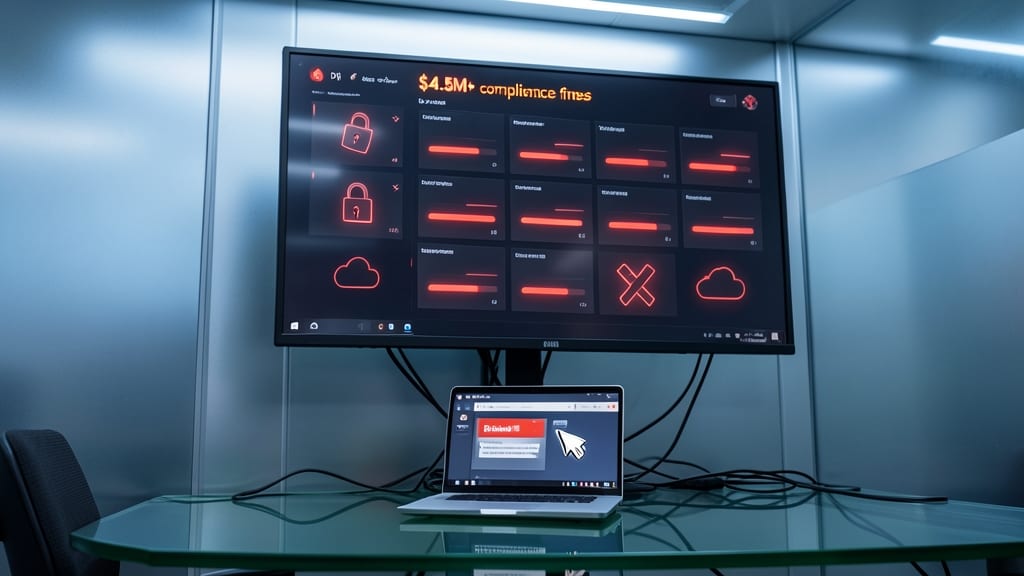
For industries handling PHI or financial data, a single misplaced file can trigger compliance fines averaging $4.5M+—but automated Data Loss Prevention (DLP) policies stop leaks before they happen. These systems monitor outgoing emails, USB transfers, and cloud uploads in real-time, flagging or blocking sensitive files based on predefined rules (e.g., credit card numbers, SSNs, or proprietary documents).
Modern DLP solutions like Symantec DLP or Microsoft Purview integrate with existing security stacks, offering context-aware scanning (e.g., blocking Excel files with embedded PHI) and policy simulation tools to test configurations without disrupting workflows. They also generate audit trails for compliance reporting, ensuring you meet HIPAA, GDPR, or PCI DSS requirements without manual oversight. ⚡
This safeguard is non-negotiable for healthcare providers, financial firms, and legal offices—where a single accidental leak can derail operations. Even small businesses handling client data should prioritize it to avoid crippling penalties. 💻
Multi-Factor Authentication Enforcement

Phishing attacks surged 200% during hybrid work transitions—but multi-factor authentication (MFA) slashes credential theft success rates by 99.9% when enforced across all systems. Unlike password-only logins, MFA adds a second verification layer (like codes or biometrics), making stolen credentials useless without the second factor.
Modern solutions like Microsoft Authenticator or Duo Security integrate seamlessly with cloud apps, VPNs, and legacy systems. Push notifications cut friction for users while hardware keys (YubiKey) offer the strongest protection for high-risk accounts. Even SMS-based MFA blocks 90% of automated attacks—though app-based codes are far more secure.
Remote teams and finance sectors see the biggest ROI, but any organization with sensitive data should enforce MFA. Start with critical systems like email and accounting—then expand to vendors and contractors. 💻
Employee Cybersecurity Training Programs

Tired of hearing about breaches caused by employees clicking malicious links? Gamified cybersecurity training transforms security awareness from a boring compliance checkbox into an engaging challenge that actually works.
Programs like KnowBe4 or PhishMe deliver real-world phishing simulations that mimic attacks your team faces daily, with quarterly refresher courses to keep skills sharp. Studies show these programs cut phishing click rates by 70%—far more effective than one-time training sessions. The interactive format makes security top-of-mind without overwhelming your staff.
Perfect for SMBs where IT budgets are tight but risks are high, these programs often include automated reporting to track progress and identify weak spots. Start with a pilot group to prove ROI before rolling out company-wide. 💡
Endpoint Detection and Response Systems

Manufacturing floors with 300+ IoT devices aren’t just complex—they’re malware magnets. Endpoint Detection and Response (EDR) systems like CrowdStrike and SentinelOne act as digital immune systems, detecting and isolating threats before they spread across connected machines, PLCs, or even smart sensors.
These solutions go beyond traditional antivirus with AI-driven behavioral analysis, real-time lateral movement tracking, and automated containment—all while generating forensic reports for post-incident review. For example, CrowdStrike’s Falcon stops ransomware within 12 seconds of execution, while Microsoft Defender for Endpoint integrates seamlessly with existing Azure environments for unified management.
Perfect for manufacturers, energy plants, or any industry with high-density IoT deployments, EDR turns reactive security into proactive defense. 💪
Secure Document Management Workflows

Misconfigured cloud shares cause 25% of data breaches—often from employees sharing sensitive files with the wrong team or forgetting to revoke access. Secure document management workflows solve this by combining version control with automatic redaction, ensuring only approved content leaves your systems.
Tools like Box Governance or Microsoft Purview track every file edit, while redaction rules auto-blank PII before sharing. For example, a legal draft marked "Confidential" will strip metadata and redact names/SSNs before reaching external reviewers. This cuts manual errors by 90% while maintaining audit trails for compliance.
Legal, healthcare, and finance teams benefit most—any industry handling regulated data. The real win? Peace of mind knowing your most sensitive documents stay protected, even when shared externally. 💻
Network Segmentation Architecture

Healthcare organizations handling Electronic Health Records (EHR) face unique threats—once attackers breach a system, they often move laterally to access sensitive patient data. Network segmentation architecture acts as a digital moat, containing breaches within isolated zones and slashing attack damage by up to 85% before it spreads.
This strategy divides networks into distinct segments (e.g., medical devices, administrative systems, and payment processing) with strict firewall rules. For example, a compromised workstation in a clinic can’t pivot to the HIPAA-protected EHR database without crossing a segmented boundary. Tools like Cisco ACI or VMware NSX automate policy enforcement, ensuring compliance while reducing manual configuration errors.
Ideal for healthcare, finance, and government sectors, segmentation turns a single breach into a contained incident—saving millions in regulatory fines and reputational damage. 🌟
Behavioral Analytics for Anomaly Detection

When employees act out of character—like accessing systems at 2 AM or downloading massive files to personal drives—behavioral analytics spots these red flags before they become breaches. Unlike static rules, this AI-powered tool learns your team’s normal patterns and flags deviations in real time, making it a game-changer for industries where insider threats dominate.
Solutions like Darktrace or Exabeam analyze login frequency, data access velocity, and device behavior to generate risk scores and automated alerts. For example, a finance employee suddenly copying client databases to an external drive triggers an instant investigation—cutting fraud detection time from days to minutes. Integration with SIEM tools ensures suspicious activity ties directly to user accounts for swift action.
Financial institutions and healthcare providers see the biggest ROI, but any organization handling sensitive data benefits. If your team’s habits are your weakest link, behavioral analytics turns them into your strongest defense. 💡
Incident Response Playbooks Development

When holiday sales spike, so do cyberattacks—retailers see a 300% increase in threats during peak seasons. Incident response playbooks turn panic into precision by pre-defining automated steps for containment, investigation, and recovery, cutting breach response times from hours to minutes.
These playbooks include step-by-step runbooks for common attack vectors (e.g., ransomware, phishing), escalation paths for critical systems, and post-incident review templates to refine defenses. Tools like Splunk ES or IBM Resilient integrate with SIEMs to trigger playbook actions in real-time, ensuring consistency even under pressure.
Retailers, e-commerce platforms, and any industry with seasonal traffic surges benefit most—especially those handling payment data. A battle-tested playbook means faster containment and fewer lost sales during critical periods. ✨
Third-Party Risk Assessment Framework

Your vendors could be the weakest link in your security chain—yet most companies only check their security posture after signing contracts. A Third-Party Risk Assessment Framework flips this script by evaluating vendor security before ink ever hits paper, using automated scans, penetration tests, and compliance audits to uncover hidden risks.
Look for frameworks that integrate continuous monitoring (not just one-time checks) and provide quantifiable risk scores tied to your industry’s compliance requirements. Tools like BitSight or SecurityScorecard automate vendor assessments, while custom frameworks let you weight criteria like SOC 2 Type II compliance or third-party audit history—critical for sectors like finance or healthcare where supply chain attacks are rampant.
This isn’t just for enterprises: even SMBs working with cloud providers or SaaS tools should demand vendor security transparency. Start with a pre-contract security questionnaire covering encryption standards, incident response plans, and subcontractor vetting—then re-assess annually. 💻